Because your brain doesn't always know that bedtime means thinking time is over. When the distractions of the day disappear, everything you haven't had time to process can suddenly get very loud.
Tomorrow's to-do list. Something you said three days ago. A problem you can't solve at 2am. You don't need to force your mind to be quiet. You need to give it somewhere else to go.
The constant replay, always wondering what ‘should’ve been’
The what-if always clouding your decision making
The tomorrow spiral, worrying about what is yet to come
The completely random thought.
Four things that help right now.
🕐 Stop checking the time
The clock won't make you sleep. And knowing it's 3:17am won't help either. Turn it away and give yourself one less thing to think about.
📱 Get the thoughts out of your head
If your brain is holding onto something, write it down. You don't need to solve it tonight.
🧠 Give your attention something gentle
A quiet voice, familiar words, slow breathing - something simple enough to follow.
🌙 Stop trying so hard to sleep
Sleep isn't an exam. Take the pressure off. Rest still counts. We won’t grade you, ever.
Your brain isn’t broken. It’s just still switched on.
Sometimes the problem isn't that you can't sleep. It's that your mind hasn't realised the day is over.
Thoughts keep coming.
The conversation you had. The email you haven't answered. Tomorrow morning. Something you forgot. Something you might have done wrong. That tiny thing you meant to sort out earlier but never got around to.
All the things that felt easy to ignore during the day can suddenly feel much louder at night. With nothing left to distract you, your mind has plenty of space to bring them all back.
Brain loves a problem.
Give it a quiet room and it will find one.
The moment the lights go out and everything gets quiet, your brain can suddenly remember all the things you didn't think about during the day. The email you forgot to send.
Something you said earlier. Tomorrow's to-do list. That one tiny worry that somehow feels enormous at 2am. The trick isn't to win an argument with your thoughts, or force your mind to go completely quiet. It's to stop giving every thought your full attention.
The 3am version of you.
Everything feels bigger at 3am.
A tiny worry becomes a catastrophe. Tomorrow feels impossible. That conversation from earlier suddenly needs analysing. Your phone starts looking very interesting.
But the things that feel urgent at 3am usually don't need solving at 3am. You don't need to make decisions, fix everything or figure out tomorrow tonight.
Let it wait. Morning-you can deal with morning things.
You don't have to empty your mind to fall asleep. You just need to stop asking it to solve everything.
Clementine
Your brain doesn't need another thing to do.
When your mind is already busy, scrolling, checking the time or making another mental to-do list only gives it more to work with.
One thought leads to another, and suddenly you're wide awake thinking about things that can absolutely wait until morning. Try something that asks nothing of you instead. No decisions.
No problem-solving. No trying to make yourself sleep. Just something gentle to follow while your mind slowly settles.
Before you decide
Five minutes. The voice.
Try something a little gentler instead. A short, calming reset for those nights when your mind has absolutely no intention of switching off - and every thought suddenly feels like it needs your attention.
−5:02
Sleep When Your Mind Won’t Switch Off · Hazel Gale
Of the 5,784 women who reviewed the sessions, they said they helped.
FAQS
The never-ending questions.
What women ask about.
Because daytime distractions disappear and your brain suddenly has space to think. All the things you haven't had time to process can start popping up at once - tomorrow's plans, unfinished tasks, little worries, or thoughts you barely noticed during the day. That's not unusual - and it doesn't mean anything is wrong with you.
Sleep isn’t something you can do on purpose. Trying hard makes your mind more alert, and noticing you’re still awake makes you frustrated, which wakes you up even more. As Hazel puts it: “the harder we try, the less we’re able.” It’s easier to let sleep come when you stop chasing it. And taking up to 30 minutes to fall asleep is fine at any age: see the 3am Report.
If you’ve been lying awake for about twenty minutes and you’re getting frustrated, yes. It’s what sleep clinicians generally advise. Go somewhere dim, do something boring (no phone), and go back to bed when you feel sleepy. It teaches your brain that bed is for sleeping, not for thinking.
Don’t argue with them, and don’t try to solve them. Write down anything you’re holding on to, so your brain knows it’s safe until morning: there’s research suggesting a quick to-do list before bed can help you fall asleep faster. Then give your attention something gentle to follow, like a quiet voice or slow breathing. In six years of our own app data, women worked through the day in bed, late at night: see the 3am Report.
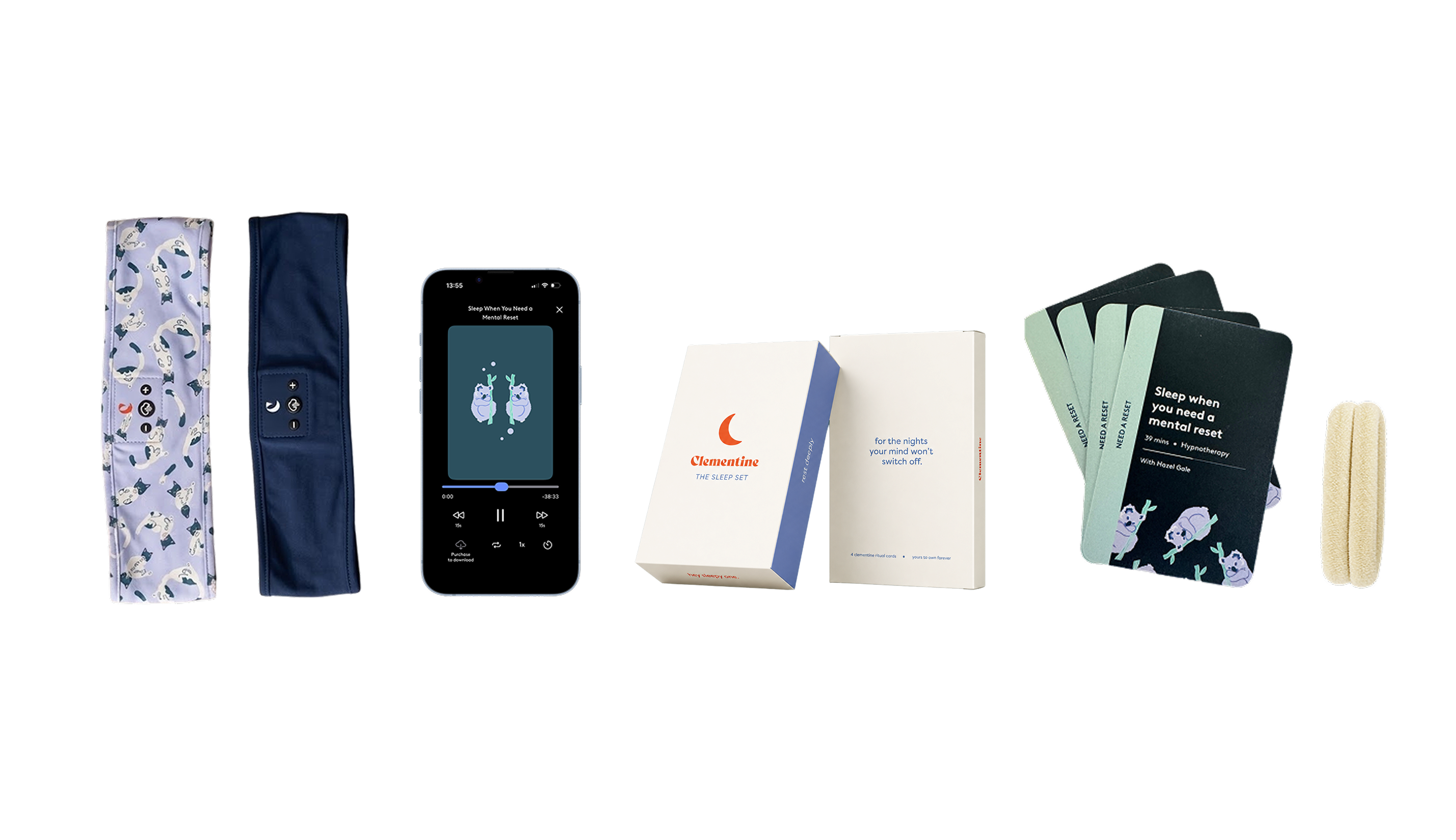
Yes, that’s where it’s meant to be played. Lights off, band on, tap the card and put your phone face down. The band is soft enough to lie on, so you can settle on your side and just listen. There’s nothing to do when it ends.
Nobody can promise that, and the session doesn’t try to force it. It gives your mind somewhere else to go and takes away the pressure to sleep, which is often what lets sleep happen. 2,566 of the 2,636 women who reviewed Sleep When Your Mind Won’t Switch Off said it helped.





 FAQS
FAQS