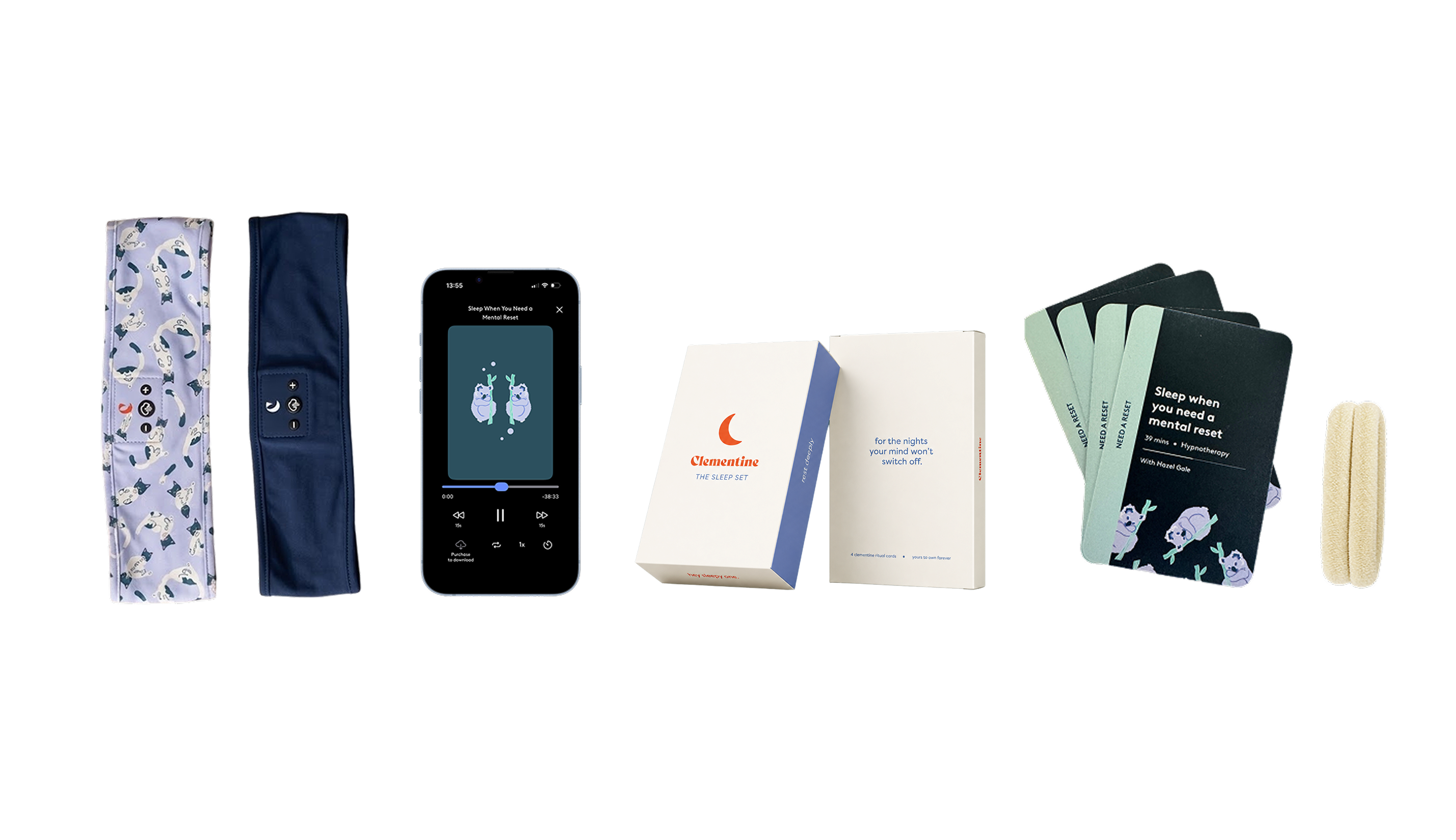
Waking up and not being able to drop off again has a name - sleep maintenance insomnia - and women get it a lot more than men. About 40% more, and more again in the perimenopause.
Everybody wakes in the night. Whether you go back under is the bit that’s different, and it’s mostly down to hormones. That’s why we only create our sessions with the experts that care about sleep.
It’s your hormones that keep moving. Progesterone helps you sleep, and it drops in the second half of your cycle, which is why the week before your period is so often the bad one. It falls off a cliff after having a baby.
And in perimenopause it comes and goes for years - along with the heat that wakes you up drenched at three. The SWAN study has followed thousands of women through exactly this.
The one person band.
And then there’s the bit nobody has put in a study. Most households have one person who keeps track of everything - the appointment, the form, the thing that needs booking before Friday.
If that’s you, some part of you never really clocks off. So you wake more easily, and the list is right there waiting the second you do.
We can’t prove that last one. But we’ve never met a woman who didn’t know exactly what we meant.
The cruelest thing about battling with sleep is that the harder we try, the less we are able.
Hazel Gale, from Wide Awake at 3am
At 3am, the answer can’t be your phone.
Every sleep app in the world asks you to pick up the brightest object in the room, unlock it, find the thing, press play, and put it down again. At three in the morning that isn’t a small task - it’s the reason you’re now properly awake.
So we put this one inside the band. Not on the card. Not in the app. In the memory of the headband itself, so it plays with no phone in the room at all.
You reach up. You press. You don’t open your eyes.
Before you decide
Five minutes. The voice.
Not the whole session - the first five minutes, so you know exactly who you’d be listening to at three in the morning. It won’t rescue tonight. It’ll be the one you want on Thursday.
Of the 5,784 women who reviewed the sessions, they said they helped.
FAQS
The 3am questions.
What women ask about.
Everyone wakes several times a night. Usually you don’t notice. In the second half of the night your sleep is lighter, so a noise, heat or a busy mind is more likely to bring you all the way up. Once it’s happened a few times, the worry about it happening again can be enough to wake you on its own.
Women are about 40% more likely than men to have insomnia. That’s from a review of the research, not us asking our own customers. Much of it is hormones: they shift across your cycle, after having a baby and through perimenopause, and they affect both how deeply you sleep and how warm you get. And if you’re the one keeping track of everything at home, part of you may never fully clock off.
It can be. Progesterone helps you sleep, and it drops in the week before your period, which is why that week is so often the bad one. Your temperature also runs a little higher in the second half of your cycle, and a warmer body wakes more easily.
It can be one sign. Waking in the night, often hot, is one of the most common changes in perimenopause, which can start in your early 40s and last for years. It has lots of other causes too. If it’s new and it comes with other changes, like hot flushes or irregular periods, it’s worth talking to your GP. In six years of our own app data, women of every age did about a fifth of their listening after midnight, from 18 to over 65: see the 3am Report.
Don’t look at the clock, and don’t pick up your phone: both turn a few drowsy minutes into being properly awake. Give your mind something dull and gentle to follow instead. That’s what Wide Awake At 3am? is for, and it’s built into the band, so you press play without opening your eyes. If you’re still awake after about twenty minutes, get up and sit somewhere dim and boring until you feel sleepy.
Sometimes. Waking with a racing mind or a pounding heart is common when you’re stressed or anxious. But hormones and heat wake women at 3am too, with no anxiety involved. If it’s happening most nights and has done for three months or more, talk to your GP. The first treatment usually offered for insomnia is a talking therapy (CBT-I), not sleeping pills.




 FAQS
FAQS