
The Clementine guide
Hypnotherapy: a complete guide
What it is, what it feels like, what the research says, and how thousands of women actually use it. Mostly at 11pm.
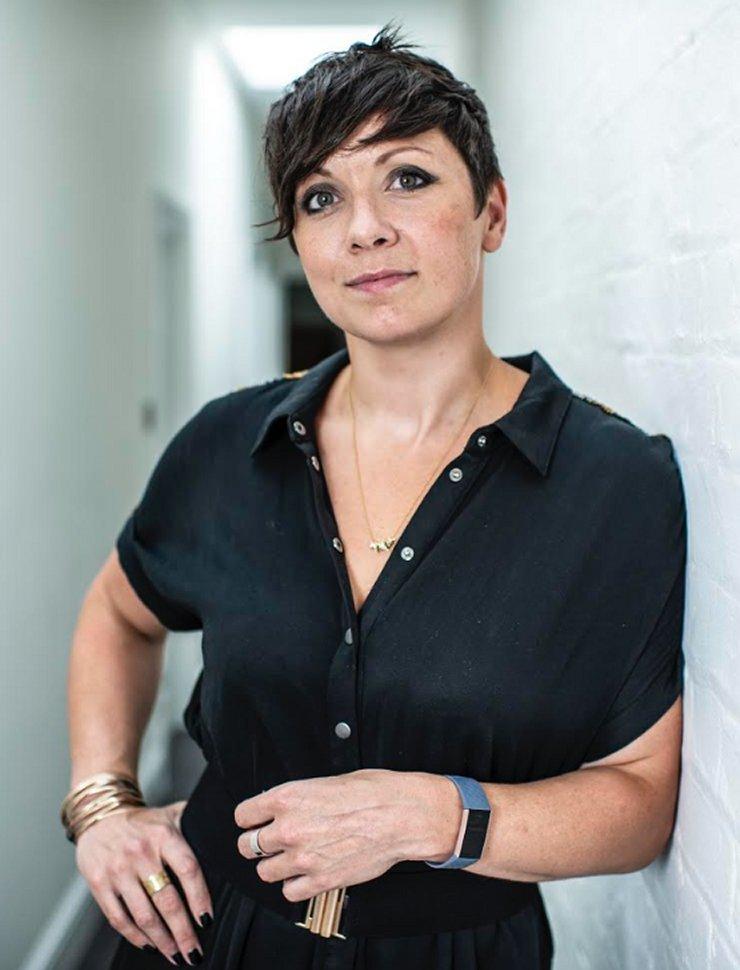
- By Kim Palmer, Founder of Clementine
- With Hazel Gale, Master Practitioner of Cognitive Hypnotherapy
- Updated
- 10 min read
In short
- Hypnotherapy is guided, focused relaxation with a purpose. A voice talks you into a calm, absorbed state, then gives your mind better things to practise.
- You stay awake, aware and in charge the whole time. Nobody can make you do anything.
- The research is promising, not finished. The strongest evidence is for anxiety and menopause hot flushes. For sleep, most studies find it helps.
- It suits people who find silence hard. There’s nothing to get right. You lie down and listen.
Hypnotherapy at a glance
- What it is
- A talking therapy that uses focused relaxation and suggestion to change thoughts, feelings and habits.
- What it feels like
- The few minutes before you fall asleep, or being lost in a good book.
- Are you in control?
- Yes. You can hear everything and stop whenever you like.
- Best evidence
- Anxiety and menopause hot flushes. Promising for sleep.
- How long to give it
- Hazel’s guideline: at least four days a week, for three to four weeks.
- Check with a GP first if
- You have epilepsy, schizophrenia or a history of psychosis.
01 · What it is
What is hypnotherapy?
Hypnotherapy is a talking therapy. A therapist guides you into a calm, focused state and then helps your mind practise a better thought, feeling or habit.
Ok so, forget the pocket watch.
In a therapy room it’s two people: a therapist helping someone change something that’s got stuck. The therapist often sends them home with a recording to listen to between sessions.
That recording is the bit we make. A calm voice guides you into what Hazel calls “a state of relaxed focus”. Then it gives your mind something useful to do: practise a calmer thought, rehearse tomorrow going well, picture somewhere you feel safe.
Hazel Gale wrote and recorded the five sessions in the Unwind & Sleep Set. She came to hypnotherapy the hard way. She competed internationally as a kickboxer and boxer for nearly ten years, and burnt out.
I suffered a massive burnout thanks to an absolutely terrible mindset. It was cognitive hypnotherapy that got me back on my feet and back into the ring.
 Hazel Gale, cognitive hypnotherapist
I’m not the expert here. Hazel is. So a lot of this guide is her.
02 · The myths
Will I lose control under hypnosis?
No. You stay conscious and in charge. You can hear everything, you can stop whenever you like, and nobody can make you do anything.
The movies have a lot to answer for. I know a lot of people working in this field and I don’t think a single one of them owns a pocket watch.
Hazel Gale, cognitive hypnotherapist“I’ll be put under”
You won’t. Even deep in a session, Hazel says, you’d still hear your partner asking if you want a cup of tea. Or the fire alarm.
“They can make me do things”
If a suggestion doesn’t sit right with you, your mind just leaves it. Nobody is clucking like a chicken.
“It’s a magic trick”
Hazel: hypnotherapy “helps your mind to do what it’s already excellent at: learning”.
“It only works on gullible people”
Being able to relax into it has nothing to do with being gullible. Hazel is firm on this one.
03 · What it feels like
What does hypnosis feel like?
Like the few minutes before you fall asleep, or being lost in a good book. Heavy, calm, and still aware of the room.
This is the bit that changed how I think about it. You’ve already been in a trance today.
Hazel says a trance isn’t a special state somebody puts you in. It’s any time the unconscious mind, not the conscious one, is “calling the shots”.
- Driving home and not remembering the journey.
- Brushing your teeth half asleep.
- Being so deep in a book that someone has to say your name twice.
Some trances are less helpful. Finding yourself at the fridge without ever deciding to go there. Replaying the same conversation at midnight.
We consider our job to be less about hypnotising people to solve their problems, and more about de-hypnotising people out of their problematic trance states.
Hazel Gale, cognitive hypnotherapistI love that.
04 · How it works
How does hypnotherapy work?
It settles your body so your attention narrows, then uses pictures, stories and repetition to help your mind learn a new way of thinking.
It gets your mind ready to learn
The voice, the pace and the breathing settle your body. The day’s noise drops back.
It talks to both halves of you
The conscious mind likes reasons. The unconscious mind likes pictures and stories. One of our sessions asks you to picture calm as a colour. Another asks you to watch your thoughts like people passing on a busy street. You don’t have to stop and chat to every one.
It repeats
The more often you think a thought, the easier it is to think it again. Hazel is clear this isn’t special to hypnotherapy. It’s how all learning happens.
There’s one more idea I like. In the therapy room, a hypnotherapist asks what change would look like for you. Speaking slower in a meeting? Laughing more? Then they put those exact things into your recording, so you notice them in real life. Hazel’s teacher, Trevor Silvester, calls these “happy traps”.
We can’t know yours. So before Hazel writes a session, we ask lots of women what they’d want to notice changing, and she puts in as many as she can.
05 · The research
Does hypnotherapy actually work?
For many people it helps, and not for everyone. The best evidence is for anxiety and for menopause hot flushes. For sleep, most studies report a benefit, and researchers want larger ones.
79%
Anxiety
In a 2019 review of 17 trials, the average person who had hypnosis ended up less anxious than about 79% of people in the comparison groups.
Valentine and others, 201974%
Menopause hot flushes
In a trial of 187 women after menopause, five weeks of hypnosis cut hot flushes by 74%, against 17% in the comparison group. They reported sleeping better too.
Elkins and others, 201358%
Sleep
A 2018 review of 24 studies found 58% of them reported a benefit for sleep, and nearly three quarters of the better-designed ones did.
Chamine and others, 201880%
Deeper sleep, for some
In a 2014 lab study of 70 young women, those most responsive to hypnosis had 80% more deep sleep after a hypnosis recording. One nap, and not everyone.
Cordi and others, 2014
There’s brain research too. In 2016, Stanford researchers scanned 57 people during hypnosis. In the 36 who respond strongly to it, and only while they were hypnotised, three things shifted, including a stronger link between two areas that the researchers call a brain-body connection. And The Menopause Society now recommends clinical hypnosis for hot flushes.
The limits matter. People differ in how strongly they respond. Hypnotherapy isn’t a medical treatment or a cure for insomnia. For long-term insomnia, the treatment usually recommended first is CBT for insomnia, through a GP.
What we can add is what women told us. 5,656 of 5,784 women said the sessions helped.
06 · Or meditation?
What’s the difference between hypnotherapy and meditation?
Meditation trains you to notice a thought and let it go, with space and silence. Hypnotherapy is a near-constant voice that gives your mind something new to take in.
They’re cousins. Both calm you down. Both are guided. The difference is what your mind is asked to do.
| Mindfulness meditation | Hypnotherapy | |
|---|---|---|
| The skill | Mindfulness meditation: Noticing a thought and letting it go | Hypnotherapy: Taking in something new |
| The sound | Mindfulness meditation: Space and silence between the words | Hypnotherapy: A voice most of the way through |
| Your job | Mindfulness meditation: Active: keep coming back to the breath | Hypnotherapy: Passive: listen, drift, come back |
| The feel | Mindfulness meditation: Clearing the mind | Hypnotherapy: Filling it with something better |
It’s less about clearing space in the mind or letting thoughts go, and more about filling the mind with positive, useful information to learn from.
Hazel Gale, cognitive hypnotherapistNeither is better. Mindfulness has changed a lot of lives. But if you’ve tried to meditate and spent ten minutes failing to empty your head, that’s the silence, the breath-counting and the effort of pushing thoughts away. Hypnotherapy asks for none of that. Hazel calls it “a colourful experience”.
When I tried meditation, I felt like a failure. I couldn’t cope with the silence. Trying to be at peace with my thoughts just felt really hard.
07 · For sleep
Can hypnotherapy help you sleep?
For many women, yes. A sleep session doesn’t knock you out. It gives the busy part of your mind a voice to follow, so the rest of you can let go.
This is where we’ve learned the most ourselves.
For six years we ran an app of hypnotherapy audio. It had sessions for mornings, for work, for wobbly afternoons. Women took it to bed. That’s from The 3am Report, built on 541,097 plays by 25,950 people.
7 in 10
Sleep
About seven in ten of the plays we can name were sleep sessions.
15%
11pm, head full
The busiest hour. That one hour is 15% of everything UK women played.
1 in 5
3am, wide awake
Roughly a fifth of a woman’s listening happens after midnight, at every age from 18 to over 65.
+34%
The night before
The night before A-level results is 34% busier than a normal night, every year.
Here’s what I think that says. Most women don’t have a sleep problem. They have a no-time-to-think problem. The day never leaves a gap, so it all turns up when her head hits the pillow.
That’s what a sleep session is for. Somewhere for the busy mind to go. Falling asleep before the end is the idea. It’s also why Wide Awake At 3am? lives in the sleep band itself: one press, no phone.
More on this: What is hypnotherapy for sleep?
08 · Not only sleep
What else do women use hypnotherapy for?
Saying no, and getting ready for the day. In our data, boundaries sessions were played at night and confidence sessions first thing.
Two things in the report surprised me.
80%
Boundaries, at night
Sessions about learning to say no were played at night about 80% of the days they were used. Mostly between 9pm and 1am.
Half
Armour, in the morning
On about half the days women used short sessions with names like “I got this sh*t”, they played them between 5am and 9am.
She works out where she should have said no in bed, after the conversation. And she puts her armour on before the day starts.
So women use hypnotherapy the way Hazel describes it. To practise a thought they’d like to think more easily.
09 · How often
How often should you listen to hypnotherapy?
Hazel’s guideline is to listen at least four days a week, for three to four weeks. It doesn’t have to be every day.
I asked Hazel this years ago and loved her answer, because she didn’t pretend.
Nobody knows exactly how long it takes for a new way of thinking to stick. There used to be a rule about 21 days. It was checked, and there was nothing behind it. Hazel says she was “gutted”, because it was so handy.
It helps to hang a session on something you already do. Getting into bed is a good one.
Our data says something kind about this too. Of the 26,000 people who used the app, 64 used it most nights. The typical woman did three quarters of her listening inside a single fortnight. Bad sleep comes in patches.
So if you lean on a session for a few weeks and then forget it exists, you haven’t lapsed. The patch ended.
10 · Recording or therapist
Is a hypnotherapy recording as good as seeing a hypnotherapist?
They do different jobs. A recording is good for what lots of us share, like switching off at night. A hypnotherapist works on what’s particular to you.
A recording
For switching off, getting back to sleep, feeling steadier. It’s there at 3am, and it costs a lot less.
A hypnotherapist
For what’s yours alone, and the root of it. Hazel is clear our sessions are “not a replacement for talk therapy”. They can sit alongside it.
Looking for one in the UK? There’s no law saying what training a hypnotherapist must have. NHS advice is to pick someone registered with a body accredited by the Professional Standards Authority.
From my own experience, I really had to feel a sense of trust, ease and safety. Of course, knowing they had the right qualifications and experience was important. But a feeling of ‘they get me’ was important too.
11 · Is it safe?
Is hypnotherapy safe?
For most people, yes. The NHS says it may not be safe if you have epilepsy, schizophrenia or a history of psychosis, so a GP is the person to ask first.
- You’re awake and in control throughout.
- The NHS says it may not be safe with epilepsy, schizophrenia or a history of psychosis. NHS Wales says not to use it if you have psychosis or certain types of personality disorder.
- Pregnant, or have a health condition? A midwife, GP or pharmacist is the one to ask.
- Never while driving.
On physical symptoms, Hazel’s own rule is the one we follow: it’s “always, always a maybe”.
Free to play
Hear it for yourself
The first five minutes of Hazel’s Wide Awake At 3am? are free. No sign-up.
Wide Awake At 3am?, read by Hazel Gale. Read it instead
It’s one of five hypnotherapy sessions in the Unwind & Sleep Set: a soft sleep band you can lie on your side in, and cards you tap to play. Buy it once. Nothing to cancel.
See the Unwind & Sleep Set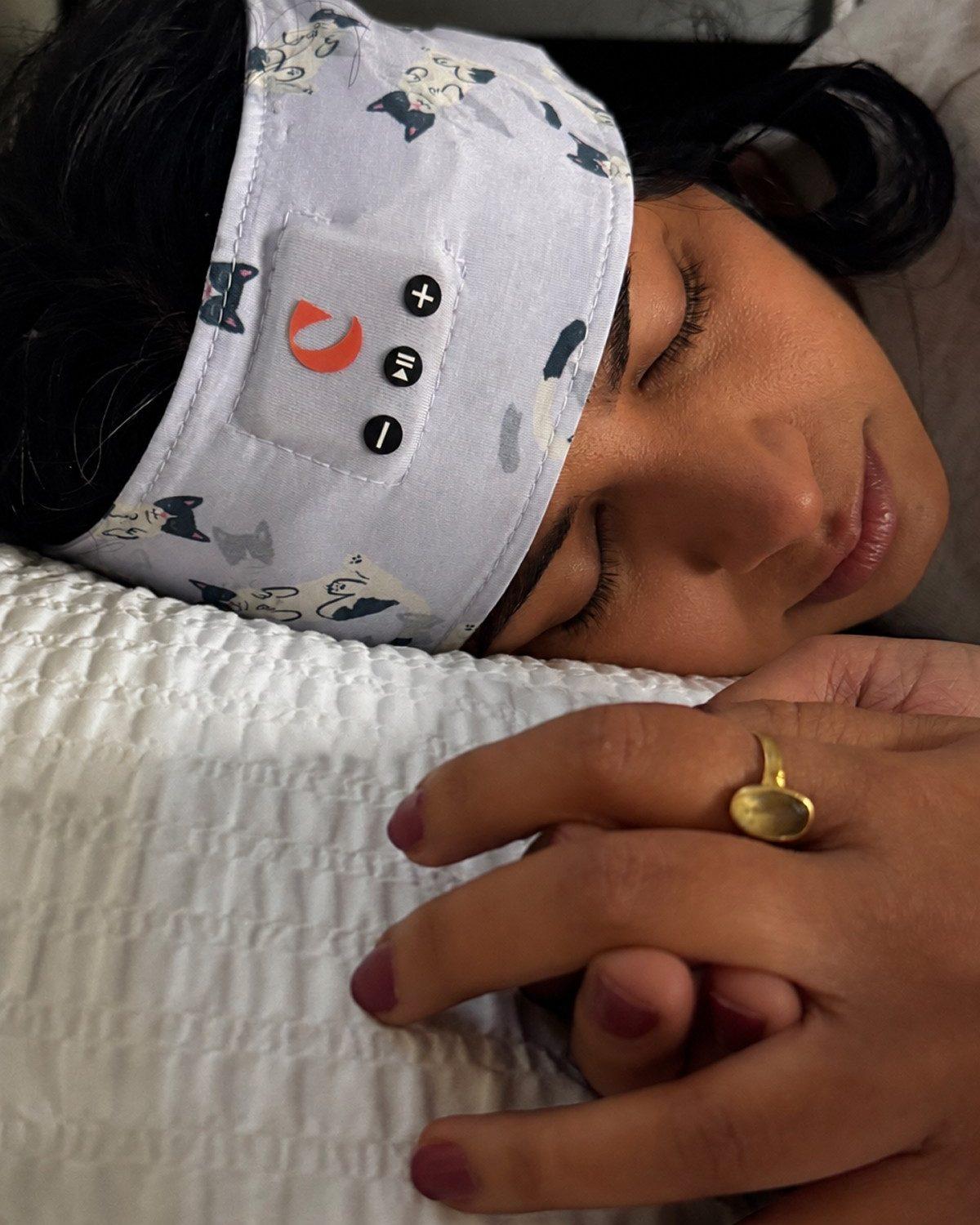
Quick questions
Can everyone be hypnotised?
Most people can relax into it to some degree, and some respond more strongly than others. Being responsive has nothing to do with being gullible.
What if I fall asleep halfway through?
With a sleep session, that’s the point. You don’t need to hear every word for it to help.
Is hypnotherapy the same as meditation?
No. Meditation trains noticing and letting go, with space and silence. Hypnotherapy is a near-constant voice that gives your mind something new to take in.
Is sleep hypnosis the same as hypnotherapy?
Sleep hypnosis is hypnotherapy used for sleep: a recording that guides you into a calm, focused state and gives a busy mind something to follow until you drift off.
Can I use hypnotherapy during the menopause?
Many women do. In a trial of 187 women after menopause, hypnosis eased hot flushes and they reported sleeping better. The Menopause Society recommends clinical hypnosis for hot flushes.
Is hypnotherapy available on the NHS?
Not usually. The NHS says it may offer hypnotherapy for irritable bowel syndrome when other treatment hasn’t worked. A GP can say what’s offered locally.
Who is Hazel Gale?
Hazel Gale is a Master Practitioner of Cognitive Hypnotherapy, trained at the Quest Institute, the author of The Mind Monster Solution, and a former international kickboxer and boxer. She wrote and voiced the five sessions in Clementine’s Unwind & Sleep Set.
Where this comes from
Hazel Gale’s words are her own, written for Clementine. The research is linked below. This guide is general information, not medical advice: for a health worry, a GP is the right person.
- Valentine, Milling, Clark and Moriarty (2019). The efficacy of hypnosis as a treatment for anxiety: a meta-analysis. International Journal of Clinical and Experimental Hypnosis.
- Elkins and others (2013). Clinical hypnosis in the treatment of postmenopausal hot flashes: a randomized controlled trial. Menopause.
- The Menopause Society (2023). Nonhormone therapy position statement.
- Chamine, Atchley and Oken (2018). Hypnosis intervention effects on sleep outcomes: a systematic review. Journal of Clinical Sleep Medicine.
- Cordi, Schlarb and Rasch (2014). Deepening sleep by hypnotic suggestion. Sleep.
- Stanford Medicine (2016). Study identifies brain areas altered during hypnotic trances.
- NHS. Herbal medicines and complementary therapies (includes hypnotherapy).
- NHS 111 Wales. Hypnotherapy.
- Clementine (2026). The 3am Report: 541,097 plays by 25,950 people, September 2020 to September 2026.